Pristine Pest
Pest Exclusion and Home Sealing in Westchester
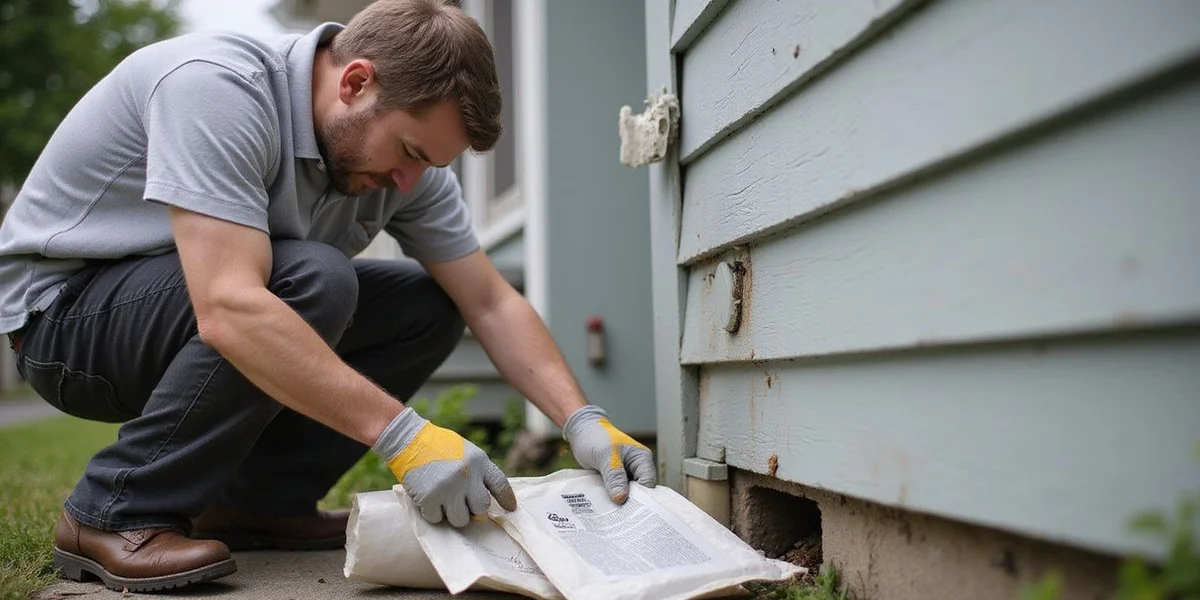
Structural repairs and sealing to physically prevent pest entry. Every gap, crack, vent, and foundation opening is identified and sealed by certified technicians using professional-grade materials that withstand weather and re-entry attempts.
What's Included
What Our Exclusion Service Includes
Full home exterior inspection
Gap and crack sealing
Vent screen repair and replacement
Foundation crack treatment
Door sweep installation
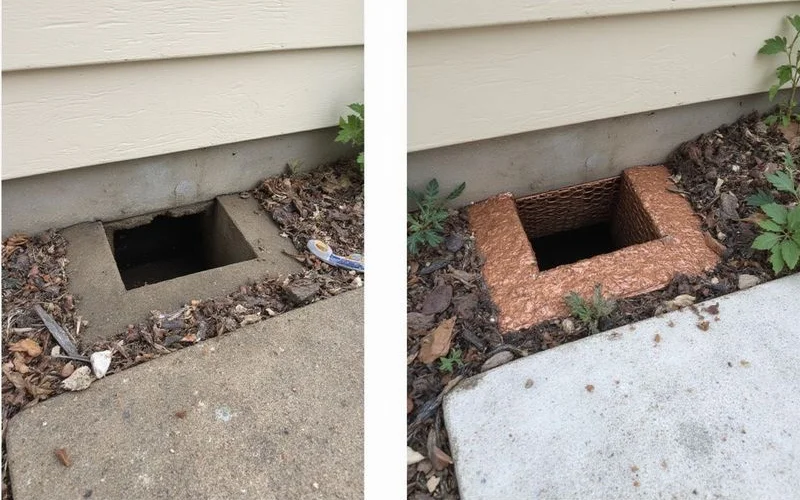
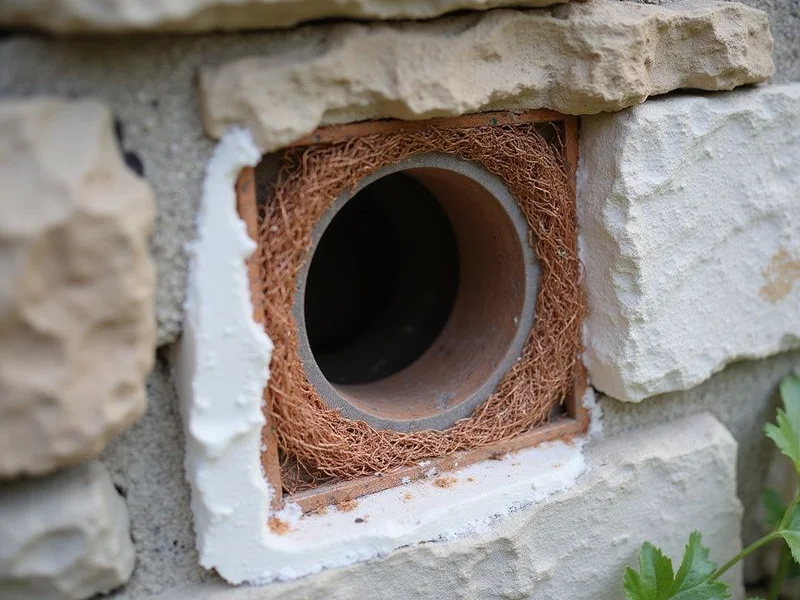
Copper mesh and steel wool barriers
Why Exclusion Is the Foundation of Effective Pest Control
Every pest inside your home entered through a specific opening in the building envelope. Whether it is a mouse squeezing through a 1/4-inch gap around a pipe penetration, carpenter ants following a water-damaged fascia board into the wall cavity, or stink bugs entering through a torn soffit screen, the principle is the same: pests exploit structural vulnerabilities to access the shelter, warmth, and food your home provides.
Traditional pest control focuses on managing pest populations after they have entered. Traps, baits, and chemical applications are effective tools - but they address the symptom, not the cause. As long as entry points remain open, new pests will continue to find their way inside, creating a cycle of recurring treatment.
Home Shield Exclusion breaks that cycle by eliminating the entry points themselves. By physically sealing the gaps, cracks, holes, and deteriorated building components that pests use to enter, we transform your home from an accessible shelter into a sealed structure that pests cannot penetrate. This is not a new concept - it is the cornerstone of Integrated pest control Management as defined by Cornell University and the EPA - but it requires specialized knowledge, materials, and techniques that go far beyond consumer-grade caulk and spray foam.
Common Entry Points in Westchester Homes
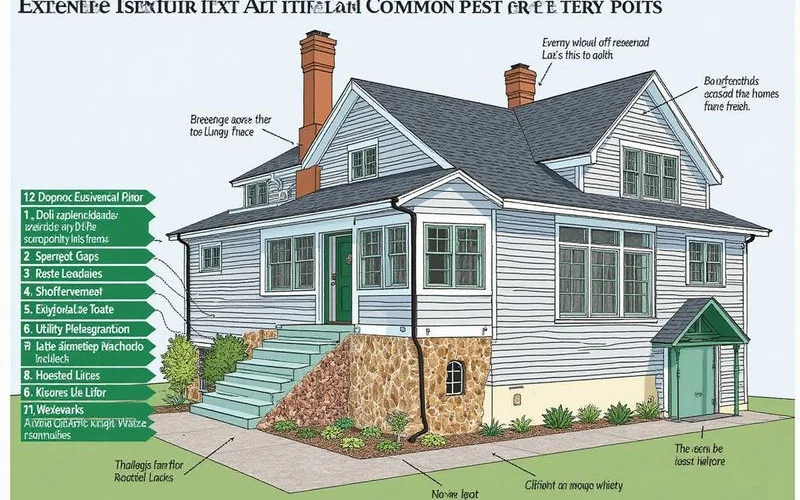
Westchester County’s housing stock spans over a century of architectural styles and construction methods. Each era presents characteristic vulnerability patterns that our technicians have learned through hundreds of completed exclusion projects.
Pre-War Homes (Pre-1940)
Stone and rubble foundations, common in Scarsdale, Bronxville, and Pelham, present numerous small openings where mortar has deteriorated between stones. Fieldstone foundations are particularly challenging because their irregular surfaces create gaps that are difficult to seal with standard products. We use a combination of hydraulic cement, copper mesh, and flexible sealant to address these openings while maintaining the foundation’s ability to manage moisture.
Older homes also feature balloon-frame construction, where wall cavities run continuously from the sill plate to the attic without fire stops. This means a mouse entering at the foundation level has an unobstructed pathway to every floor, including the attic. Sealing the sill plate area and installing fire stops at floor transitions is essential for these structures.
Mid-Century Homes (1940-1975)
Homes from this era typically have poured concrete or block foundations with fewer stone-related issues but commonly feature utility penetrations that were never properly sealed. Gas lines, water mains, electrical conduits, cable and phone lines, and HVAC refrigerant lines all create openings in the foundation or exterior walls. Over time, the original sealant around these penetrations deteriorates, leaving gaps that mice and insects exploit.
Ranch homes and split-levels from this era also commonly have attached garages with deteriorated garage-to-house door seals, providing a major pathway for mice to enter living spaces through the garage.
Modern Construction (1975-Present)
Even newer homes have exclusion vulnerabilities. Common issues include gaps at roof-wall intersections, weep holes in brick veneer that lack insect screening, vinyl siding J-channel that allows insect entry, improperly screened foundation vents, and AC condenser line-set penetrations that were never sealed.
Professional Exclusion Materials
The materials used for exclusion work are as important as the installation technique. Consumer-grade products from hardware stores are designed for general home improvement, not pest exclusion. They often lack the durability, pest-resistance, and weather tolerance required for lasting results.
Copper Mesh
Copper mesh is our primary material for filling irregular gaps and voids. Unlike steel wool, copper does not rust and maintains its structural integrity for years. Mice cannot gnaw through copper mesh, and its natural flexibility allows it to conform to irregular opening shapes. Over time, copper develops a green patina that blends with many architectural finishes.
Galvanized Hardware Cloth
For larger openings such as crawlspace vents, soffit screens, and gable vents, we use 1/4-inch galvanized hardware cloth. This 16-gauge welded wire mesh is strong enough to resist raccoon and squirrel attempts to push through while preventing mice and insects from entering through the mesh openings.
Architectural-Grade Sealants
We use polyurethane and silicone-based sealants rated for exterior exposure, UV resistance, and temperature cycling from -40°F to 250°F. These products maintain flexibility through Westchester’s freeze-thaw cycles without cracking or pulling away from surfaces - a common failure mode for standard hardware store caulk.
Expanding Foam with Reinforcement
For deep voids and pipe penetrations, we use closed-cell expanding foam combined with embedded copper mesh or steel wool. The foam alone is easily chewed through by rodents; the metal reinforcement prevents gnawing while the foam provides an airtight, weather-resistant seal.
The Home Shield Inspection Process
Our inspection follows a systematic protocol that examines your home’s exterior in a clockwise pattern, beginning at the front door and working around the entire perimeter at three levels: ground/foundation, mid-wall, and roofline/eave.
At each section, we document:
- Open gaps and holes visible at current inspection
- Deteriorated materials that will become entry points if not addressed
- Previous repair attempts that are failing or inadequate
- Conducive conditions such as wood-to-soil contact, dense vegetation against the foundation, and improper grading
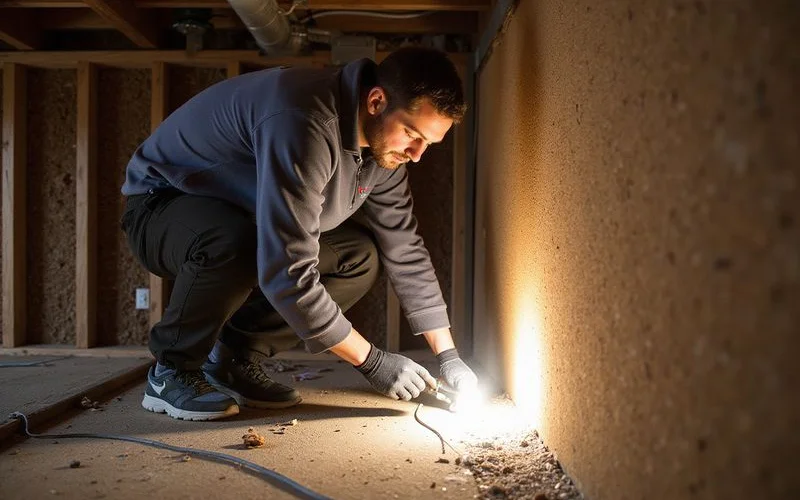
The interior inspection focuses on the basement or crawlspace, where most pest entry from the exterior first manifests. We examine the rim joist area (the most common mouse entry zone in framed construction), utility penetrations through the foundation wall, and any visible pathways between the foundation level and upper floors.
You receive a detailed inspection report with photographs and a prioritized list of exclusion recommendations before any work begins. We walk through the findings with you, explain the risk associated with each opening, and provide a clear estimate for the complete exclusion scope.
Exclusion as Part of Your Pest Management Strategy
Home Shield Exclusion works best as a complement to our other services. Pairing exclusion with the Home Protection Plan creates a layered defense - exclusion prevents new pest entry while the HPP manages any existing populations and provides ongoing monitoring.
For homeowners using our SMART Digital Pest Monitoring, exclusion data is invaluable. Sensor activity patterns often reveal exactly which entry points rodents are using, allowing us to target exclusion work with precision rather than sealing every potential opening without knowing which ones are active.
Contact Pristine Pest today to schedule your Home Shield Exclusion inspection. Our certified technicians will identify every vulnerability in your Westchester home and provide a comprehensive plan to seal it against pest entry - permanently.
Our Process
How Our Exclusion Process Works
A systematic, science-based approach to solving your pest problem.
360-Degree Exterior Inspection
Our technician conducts a systematic inspection of your home's entire exterior - foundation, siding, soffits, roofline, windows, doors, utility penetrations, vents, and chimney. Every gap, crack, and opening larger than 1/4 inch is documented with photos and mapped on our inspection report.
Interior Vulnerability Assessment
We inspect interior areas where pests commonly enter living spaces - basement rim joists, utility closets, HVAC penetrations, plumbing chases, fireplace surrounds, and garage-to-house connections. This identifies the pathways pests use to move from exterior entry points into your home.
Professional Exclusion Installation
Using species-appropriate materials - copper mesh, steel wool, galvanized hardware cloth, expanding foam, aluminum flashing, and commercial-grade sealants - we seal every identified opening. Materials are selected based on location, exposure to weather, aesthetic considerations, and the specific pests they need to resist.
Post-Exclusion Verification
After completing all repairs, we conduct a verification walkthrough to confirm every opening has been properly addressed. You receive a detailed report with before-and-after photos of all exclusion points and a 12-month warranty on all materials and workmanship.
Why Choose Us
Why Homeowners Choose Us for Exclusion
The Most Effective Pest Control Is Prevention
Chemical treatments manage pest populations inside your home. Exclusion prevents pests from getting inside in the first place. By eliminating entry points, you reduce the need for ongoing chemical applications - making your home safer and requiring less maintenance.
Professional-Grade Materials That Last
Hardware store caulk and spray foam deteriorate within months. Our exclusion materials - 16-gauge galvanized mesh, architectural-grade sealants, and heavy copper mesh - are selected for durability against weather, UV exposure, and animal re-entry attempts. All work carries a 12-month warranty.
Westchester Housing Stock Expertise
We have sealed hundreds of Westchester homes - from 1920s stone-foundation colonials to modern construction. Each architectural style has characteristic vulnerability patterns, and our technicians know exactly where to look and what materials perform best for each construction type.
Our Work
Exclusion Results in Westchester
Questions
Exclusion FAQ
Common questions about our home shield exclusion services.
How small of a gap can a mouse fit through?
Will the exclusion work be visible on my home's exterior?
How long does a full home exclusion take?
Testimonials
What Clients Say About Our Exclusion Service
"After years of dealing with recurring mice, Pristine Pest installed their SMART sensors and sealed every entry point. We haven't seen a single mouse in over a year. The digital monitoring gives us total peace of mind."
Margaret R.
Scarsdale, NY
"We were terrified about Lyme disease with our kids playing in the yard. The LymeShield program has been incredible - no ticks found after three seasons. Worth every penny."
David K.
Rye, NY
"Professional, knowledgeable, and genuinely scientific in their approach. They actually explained the biology behind our carpenter ant problem and solved it without drenching our house in chemicals."
James T.
Larchmont, NY
Related Services
Complementary Pest Protection Services
Comprehensive pest management often benefits from combining related services for complete coverage.
General Pest Control
Comprehensive residential pest management using Integrated Pest Management protocols. Protection against mice, rats, carpenter ants, roaches, stinging insects, spiders, crickets, and silverfish.
Learn MoreSMART Digital Pest Control
24/7 wireless sensor monitoring powered by Anticimex SMART technology detects rodent activity in real-time - no toxic baits, no traps, no chemicals. Proactive digital pest monitoring for Westchester homes.
Learn MoreWildlife Control
Humane removal and exclusion of bats, squirrels, raccoons, groundhogs, skunks, and other nuisance wildlife. Licensed by the New York State Department of Environmental Conservation for Westchester County.
Learn MoreReady for Exclusion?
Get a free inspection and customized home shield exclusion plan from our Cornell-educated team. Serving Westchester County 24/7.