Why Fall Is Peak Season for Wildlife Home Invasions
As temperatures drop, squirrels, raccoons, and bats seek shelter in Westchester homes. Learn why fall exclusion work prevents costly winter wildlife problems.
Sarah Nguyen
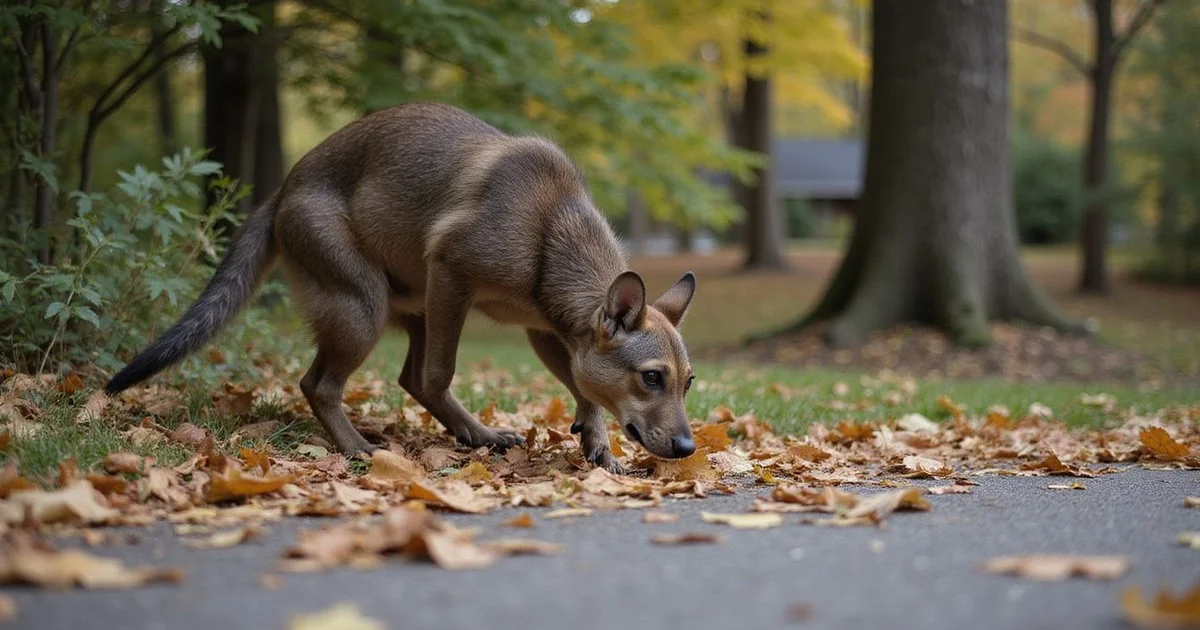
The Fall Migration Into Your Home
We have analyzed years of service calls across Westchester County and identified a precise biological trigger for home invasions. The moment overnight temperatures consistently drop below 50 degrees, local wildlife shifts from casual foraging to urgent shelter-seeking. Your attic, with its stable temperature and protection from the elements, mimics the ideal winter den conditions these animals are programmed to find.
This seasonal pattern creates a predictable surge in activity that many property owners overlook until it is too late, making professional pest control essential. Why Fall Is Peak Season for Wildlife Home Invasions comes down to simple biology and the desperate need to conserve energy. Understanding this timing allows you to secure your home before the migration begins in earnest.
The Biology Behind Fall Intrusions
Thermoregulation Challenges
We often explain to clients that wildlife invasions are rarely about aggression; they are about energy conservation. As ambient temperatures in Westchester drop from the 70s in September to near freezing by November, animals like raccoons and squirrels face a critical caloric deficit. A secure, insulated den significantly reduces the metabolic cost of staying warm.
Research supports this observation. The Journal of Mammalogy notes that squirrels denning in insulated structures expend up to 30% less energy than those in natural tree cavities. This energy savings is often the difference between surviving the winter and freezing to death.
The Food Caching Instinct
Gray squirrels are the most frequent uninvited guests we encounter in Westchester attics during autumn. We see them enter a frantic state of hyper-foraging known as the “scatter-hoarding” phase. They are biologically compelled to collect thousands of acorns and hickory nuts from the abundant hardwood forests in Chappaqua, Bedford, and Pound Ridge.
An attic offers a dry, predator-free warehouse for this food supply. Storing nuts in your insulation prevents them from rotting and keeps them accessible during snowstorms.
Reproductive Planning
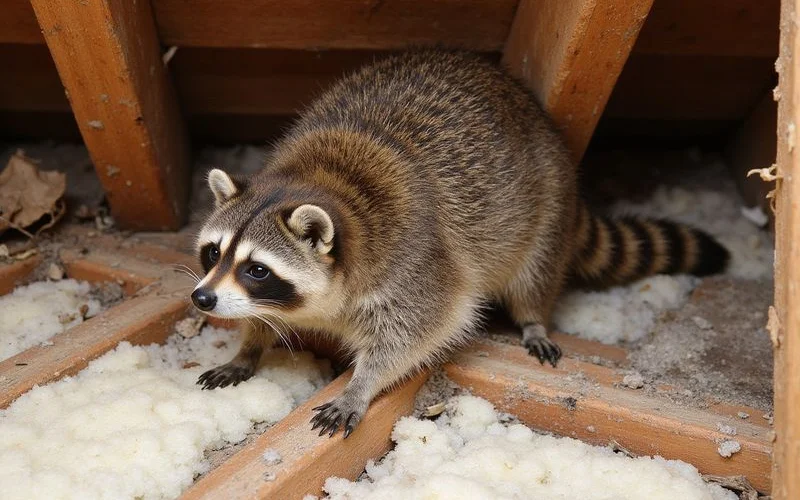
We also encounter female raccoons scouting for nursery sites as early as October, long before they actually give birth. Biology drives them to secure a safe location for the spring birthing season well in advance. Raccoons that successfully enter a structure in the fall will often remain dormant through the winter and give birth in March or April.

Which Species Invade in Fall
Gray Squirrels
We regard the Eastern Gray Squirrel (Sciurus carolinensis) as the most persistent structural threat in our region. These animals possess a bite force of approximately 22,000 pounds per square inch (PSI). This power allows them to chew through aluminum fascia, plastic vents, and even soft or rotted wood with ease.
Common entry points include:
- Construction Gaps: Spaces where dormers meet the main roof line.
- Roof-Soffit Intersections: The most frequent weak point we identify.
- Fascia Boards: Areas with water damage are primary targets.
- Roof Vents: Standard aluminum or plastic insect screens cannot withstand their teeth.
- Ridge Caps: Loose end pieces provide easy access.
Flying Squirrels
Our technicians frequently find Southern Flying Squirrels (Glaucomys volans) in attics where homeowners had no idea they existed. These nocturnal rodents are roughly the size of a chipmunk and are highly social during winter. It is common to find colonies of 10 to 20 individuals huddled together for shared warmth.
A gap as small as a thumb is sufficient for them to squeeze through.
Raccoons
We treat raccoon intrusions with high priority due to the physical damage they cause. Raccoons (Procyon lotor) are strong enough to rip standard roof vents right off their mounting. They utilize their dexterity to exploit:
- Uncapped Chimneys: A direct chute into the home.
- Soffit Panels: They can push these up to bypass the roof edge.
- Roof Vents: Standard mushroom vents are easily pried open.
- Rotten Wood: Any structural weakness is quickly expanded.
Bats
We see a different behavior pattern with bats during the fall season. While they typically establish colonies in summer, fall is when the Big Brown Bat (Eptesicus fuscus) selects its hibernation site. Instead of migrating south, these bats often move deeper into attics to overwinter near chimney flues where temperatures remain stable above freezing.
Why Waiting Until Spring Is a Mistake
We strongly advise against the “wait and see” approach when you hear scratching in the ceiling. Ignoring early signs usually leads to compounded damage and higher costs.
Damage Accumulates Rapidly
Every week an animal remains inside, the destruction of your home’s thermal envelope continues. A squirrel or raccoon residing in your attic from October to March has five months to trample insulation, chew electrical wiring, and saturate the drywall with urine. The R-value (thermal resistance) of your insulation drops significantly when compressed or soiled.
The Territorial Factor
We find that animals establish a strong psychological attachment to a den the longer they occupy it. Excluding a squirrel that has lived in your attic for five months is far more difficult than removing one that arrived last week. Established animals will work much harder to chew their way back in.
Spring Birthing Complications
Our most difficult extractions involve raccoon mothers with litters of kits in the spring. If a female raccoon establishes residency in the fall, she will almost certainly birth her young there. Removing a protective mother and her inaccessible babies is complex, expensive, and stressful for the homeowner.
The Cost of Inaction
We created this comparison to illustrate the financial difference between proactive prevention and reactive repair.
| Expense Category | Fall Prevention (Proactive) | Spring Remediation (Reactive) |
|---|---|---|
| Service Type | Exclusion & Sealing | Trapping, Removal & Repair |
| Insulation Status | Remains Intact | Often Requires Replacement |
| Wiring Damage | None to Minimal | High Risk of Chewing/Fire Hazards |
| Biological Waste | Minimal Cleanup | Deep Cleaning/Sanitization Required |
| Estimated Cost | $ (Lower) | $$$ (Significantly Higher) |
Fall Exclusion: The Preventive Approach
We focus on exclusion because it is the only permanent solution to wildlife conflicts. This process involves a systematic “lockdown” of the home’s exterior to physically block entry before animals can get inside.
The Exclusion Inspection
Our licensed wildlife biologists perform a forensic-style inspection of the entire building envelope. A proper assessment in Westchester must cover:
- Roof Line: Every inch of the soffit-to-fascia junction.
- Ventilation: Ridge vents, gable vents, and attic fans.
- Chimneys: Flashing integrity and cap security.
- Utilities: Where pipes and cables enter the siding.
- Foundations: Crawl space vents and basement windows.
Professional Sealing Materials
We use industrial-grade materials that far exceed the quality of products found at local hardware stores. Determined wildlife will quickly bypass spray foam or plastic covers.
Effective barriers include:
- 16-Gauge Galvanized Steel Mesh: We use this for vent covers because squirrels cannot chew through it.
- High-Density Hardware Cloth: Essential for screening off large openings.
- Custom Metal Flashing: Used to bridge construction gaps and reinforce weak fascia.
- Stainless Steel Chimney Caps: These prevent raccoons from accessing the flue.
Optimal Timing for Service
We schedule these services based on the biological calendar of local wildlife.
- September: The ideal window. Weather allows for safe roof work, and animals are just beginning their search.
- October: High urgency. Squirrels are actively scouting, and nights are getting cold enough to trigger entry.
- November: Critical phase. Animals are likely already attempting entry. Immediate action is required to prevent overwintering.
What Homeowners Can Do Now
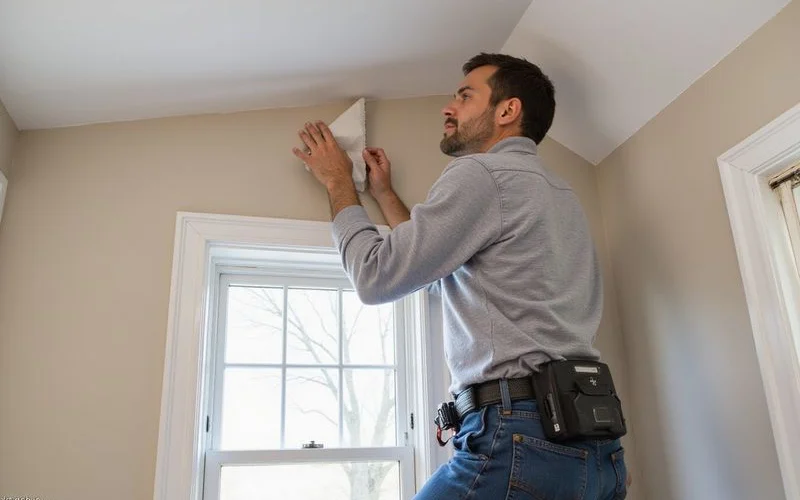
We recommend several immediate steps you can take to lower your risk profile while waiting for a professional inspection.
- Trim Vegetation: Cut back tree limbs to create an 8-foot buffer from your roof.
- Manage Waste: Secure garbage cans with bungee cords or locking lids to reduce scent attraction.
- Visual Scan: Walk the perimeter of your house and look for loose soffit panels or new holes.
- Remove Food: Bring bird feeders inside at night, as they attract rodents which then seek shelter nearby.
- Check the Attic: Pop your head into the attic during the day; if you see shafts of sunlight coming through the eaves, you have open entry points.
Schedule Your Fall Exclusion Assessment
We provide comprehensive wildlife control and exclusion services designed for the specific architecture and wildlife pressures of Westchester County. Our team identifies vulnerabilities that others miss and seals them with materials guaranteed to keep nature outdoors. Fall is the single most important time to secure your home. Call us at 844-288-7740 to schedule your assessment before the temperature drops further.
Written by
Sarah Nguyen
Licensed Wildlife Biologist
Wildlife biologist specializing in humane removal and LymeShield deployment.
Keep Reading
Related Articles
Seasonal Pest Calendar: What to Expect in Westchester County
Month-by-month guide to pest activity in Westchester County. Know which pests are active each season and how to prepare your home year-round.
When to Start Tick Prevention in the Hudson Valley
Timing is critical for tick prevention. Learn when to deploy tick tubes, start perimeter treatments, and protect your yard in the Hudson Valley region.