6 Warning Signs of Termite Damage in Westchester Homes
Mud tubes, hollow wood, and swarmers are early signs of termite activity. Learn how to spot subterranean termite damage before it becomes costly.
Michael Corsetti
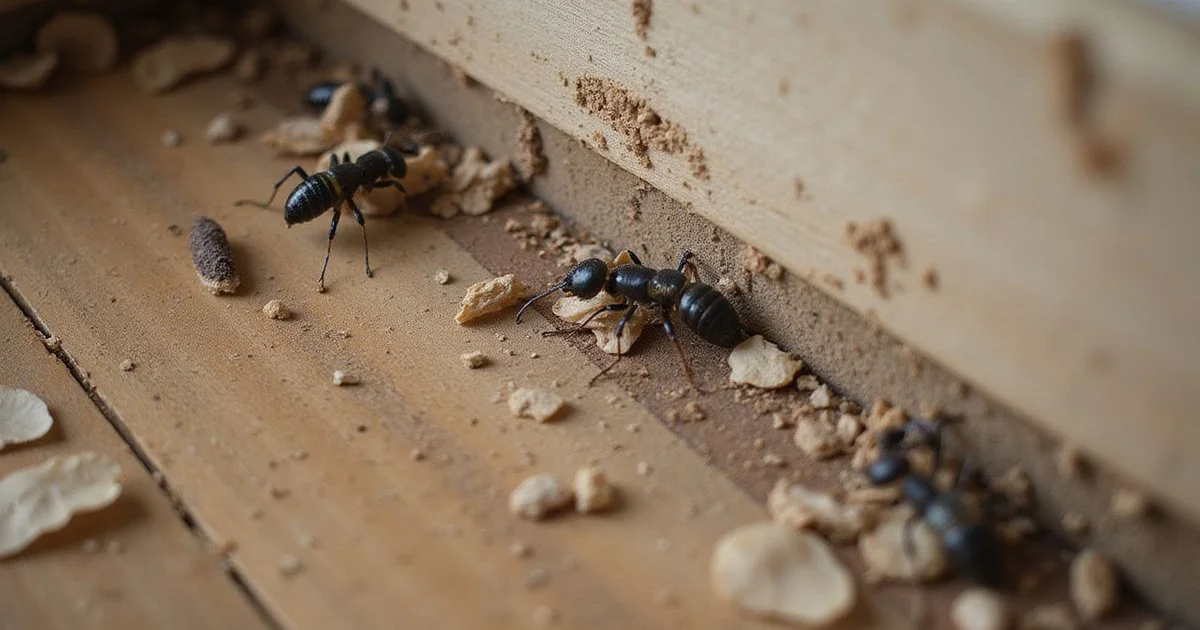
The Silent Destroyers
You might be surprised to learn that Westchester County sits in a “moderate to heavy” termite activity zone according to the USDA Forest Service. We see the reality of this map every day in homes from Yonkers to Yorktown Heights.
The Eastern subterranean termite (Reticulitermes flavipes) is the specific culprit in our region. These pests are incredibly efficient at staying hidden. They consume wood 24 hours a day, seven days a week, without sleeping.
A mature colony can contain anywhere from 60,000 to over 1 million workers.
Local Reality Check: A healthy colony in our area can consume the equivalent of one foot of a 2x4 board in about six months. That might sound slow, but the damage is often spread across multiple structural beams, making it harder to detect until it is severe.
Knowing the specific warning signs is your best defense against a repair bill that averages over $3,000 nationally. Professional pest control starts with early detection.
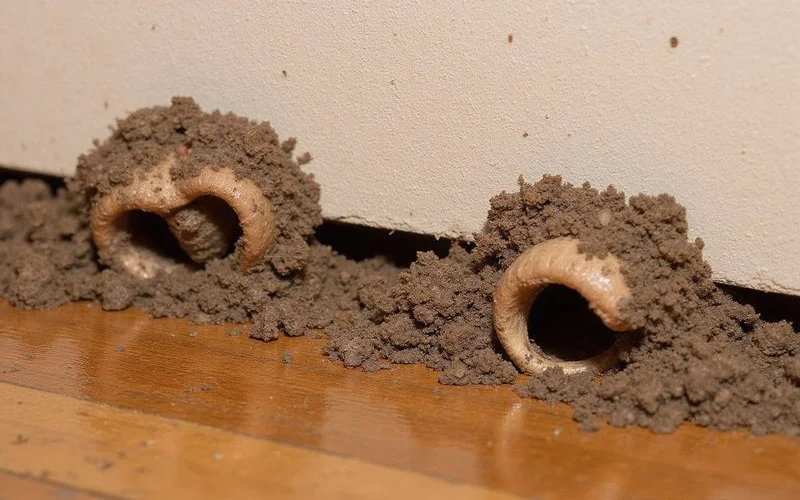
Sign 1: Mud Tubes on Foundation Walls
Mud tubes are often the first visible evidence of an infestation. These pencil-width tunnels serve as protected highways for termites traveling between their underground colony and the wood in your home.
Termites have soft bodies that dry out quickly. They build these tubes from soil and saliva to maintain a humid environment while they work.
In Westchester, we frequently find these tubes on the interior walls of unfinished basements. This is especially common in the older stone foundations found in pre-war homes in Bronxville and Pelham. The uneven surface of stone or rubble foundations provides many small gaps where tubes can remain hidden.
Where to inspect:
- Along the top of the foundation wall where it meets the floor joists.
- Around water and gas pipes entering the foundation.
- Behind stored boxes or shelving units in the basement.
- On exterior concrete walls, rising from the soil.
Sign 2: Swarmers or Discarded Wings
The appearance of swarmers is usually the most alarming sign for homeowners. These are the winged reproductive members of the colony.
In our region, swarming season typically hits between mid-April and late May. However, recent warmer winters in New York have sometimes triggered swarms as early as March.
You might see hundreds of flying insects suddenly appear inside your home, often near a sunny window or glass door. They are attracted to the light. After a short flight, they shed their wings and attempt to mate. Finding piles of wings on a windowsill is just as significant as seeing the bugs themselves.
Is it a Flying Ant or a Termite?
Many homeowners confuse termites with flying carpenter ants. We use this simple comparison to tell them apart:
| Feature | Termite Swarmer | Flying Ant |
|---|---|---|
| Waist | Broad, straight waist (thick) | Pinched, narrow waist (wasp-like) |
| Antennae | Straight and beaded | Elbowed or bent |
| Wings | All four wings are equal length | Front wings are longer than back wings |
| Appearance | Often looks like a “flying grain of rice” | Looks like a large ant with wings |
If you find insects and aren’t sure, grab a few. Place them in a Ziploc bag or a jar with rubbing alcohol. This physical evidence allows us to give you a 100% accurate identification immediately.
Sign 3: Hollow-Sounding Wood
Termites consume wood from the inside out. They leave a thin outer layer of paint or wood grain intact to protect themselves from the dry air.
This feeding pattern means a piece of wood can look perfect but have zero structural integrity.
We recommend using the handle of a screwdriver to tap along your baseboards and window frames. Healthy wood should make a solid thud. Damaged wood will make a hollow, papery sound.
High-Risk Inspection Zones:
- Basement Window Frames: These often sit close to the soil line.
- Sill Plates: The piece of wood that sits directly on top of your foundation wall.
- Support Posts: Check the bottom of any wooden posts in the basement that touch the concrete floor.
Sign 4: Bubbling or Peeling Paint
You might notice paint that looks uneven or bubbled. It often resembles water damage.
Termites introduce moisture into the wood they eat. This moisture causes the painted surface above to bubble or peel away.
Unlike standard water leaks, the wood underneath this bubbling will often feel soft or spongy if you press on it. We often see this on drywall or wood paneling. If you have paint bubbling but no plumbing pipes or roof leaks nearby, you need to investigate for pests.
Sign 5: Frass and Debris
Subterranean termites generally do not leave visible droppings. They use their waste to build their mud tubes.
However, drywood termites are a different story. While less common in New York than subterranean termites, they can arrive in antique furniture or imported wood.
Drywood termites push fecal pellets out of their tunnels to keep their galleries clean. These pellets are known as frass.
Identifying Frass:
- Shape: Hard, six-sided pellets (requires a magnifying glass to see clearly).
- Color: Can vary from light tan to almost black.
- Appearance: Looks like a small pile of sawdust, sand, or coffee grounds.
If you see mysterious piles of “dirt” appearing below a piece of furniture or a wooden beam, do not just sweep it up. Save a sample for inspection.
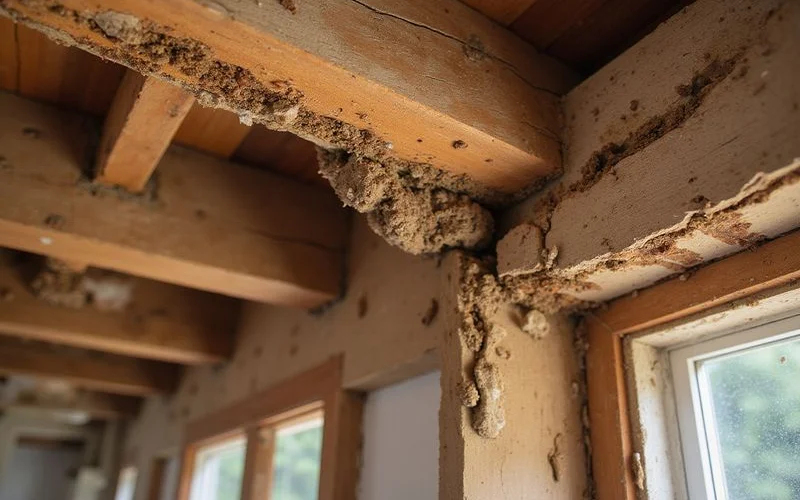
Sign 6: Doors and Windows That Stick
Structural damage shifts the geometry of your home. When termites eat away at the framing studs, the integrity of the door or window opening is compromised.
The pressure of the house causes the frame to warp slightly.
You might notice a door that suddenly requires a hard push to latch. A window might become difficult to slide up or down.
This issue is often most noticeable during humid Westchester summers. While humidity causes wood to expand naturally, sticking that persists or worsens is a red flag for structural issues.
Immediate Steps to Take
1. Resist the Urge to Disturb
It is natural to want to spray the bugs or break open the mud tubes. Please do not do this.
Termites are sensitive to disturbance. If you break their tubes or spray them with over-the-counter chemicals, they will retreat and move to a different area of the house. This makes it much harder for us to locate the main colony and assess the full extent of the problem.
2. Schedule a Professional Assessment
You need an inspection from a licensed professional. In New York, look for a DEC-certified applicator.
We perform a comprehensive evaluation that includes the exterior perimeter, the basement or crawlspace, and the attic. Our team uses moisture meters and sounding tools to find activity that is invisible to the naked eye.
3. Choose Low-Toxicity Solutions
Many Westchester homeowners are concerned about chemical safety. We specialize in modern, low-toxicity treatments.
- Bait Systems: Systems like Sentricon use a small amount of active ingredient contained in a station. The worker termites carry the bait back to the colony, eliminating the queen. This removes the need for pumping hundreds of gallons of liquid into the soil.
- Targeted Liquids: For immediate control, we can use non-repellent liquids like Altriset. These products are designed to be low-impact on the environment while highly effective against social insects.
4. Check Your Paperwork
Most standard homeowners insurance policies in New York specifically exclude termite damage. They view it as a preventable maintenance issue.
However, keeping records of your inspections and treatments is vital for your home’s resale value. A “termite-free” certification is a standard requirement for real estate transactions in our area.
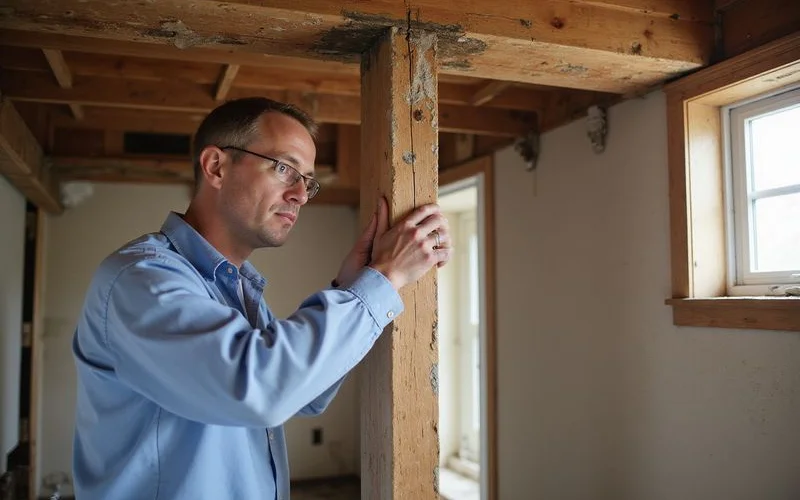
Protect Your Investment
Pristine Pest provides comprehensive termite control inspections and treatment programs for homeowners throughout Westchester County and the Hudson Valley. We focus on premium, low-toxicity options that protect your family and the local ecosystem.
Our team brings over 50 years of combined local experience to every inspection. We know exactly where to look in Westchester’s specific home styles.
Call us at 844-288-7740 to schedule your inspection. Catching the 6 Warning Signs of Termite Damage in Westchester Homes early is the best way to ensure your property remains safe and sound.
Written by
Michael Corsetti
Board-Certified Entomologist
Cornell-educated entomologist with 20+ years in urban pest management.
Keep Reading
Related Articles
7 Signs You Have a Pest Problem in Your Westchester Home
Learn the early warning signs of a pest infestation in Westchester County homes. From droppings to wall scratching, know when to call a professional exterminator.
5 Benefits of 24/7 Pest Detection Technology for Your Home
From early detection to zero chemicals, discover why round-the-clock digital pest monitoring is changing how Westchester homeowners protect their properties.

Lyme Disease Symptoms Every Westchester Resident Should Know
Westchester County is a high-risk area for Lyme disease. Learn to recognize early symptoms, when to seek treatment, and how to reduce tick exposure.