How Much Does Termite Treatment Cost in Westchester County?
Get realistic termite treatment pricing for Westchester homes. Compare costs for Sentricon bait stations, liquid treatments, and annual monitoring plans.
Michael Corsetti
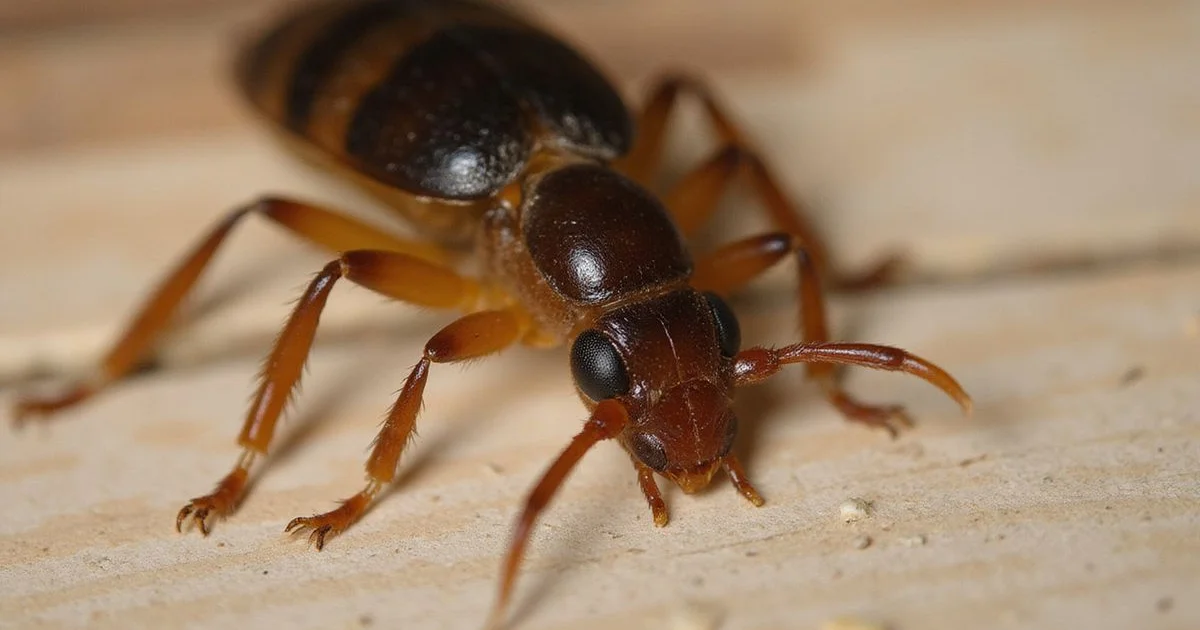
What Actually Drives Termite Treatment Costs
Figuring out the exact price of pest control and termite treatment in Westchester County isn’t as simple as checking a standard price menu.
We find that local pricing varies significantly because no two properties in this region are exactly alike.
Your final quote depends heavily on specific construction variables that change how much labor and material is required.
These are the primary factors that determine the bottom line:
- Linear Footage: The total length around your foundation is the main multiplier for material costs.
- Foundation Complexity: A simple slab costs less to treat than a home with a crawl space, a full basement, and a dirt-floor garage.
- Drilling Requirements: Homes in towns like Scarsdale or White Plains often have extensive bluestone patios or granite walkways that require specialized diamond-tip drilling.
- Soil Composition: The clay-heavy soil common in Greenburgh requires different application rates than the rocky terrain found in Northern Westchester.
- Infestation Level: Treating a precautionary barrier is cheaper than addressing an active swarm that has already breached the sub-floor.
The “New York Premium” on Labor
You should also be aware of regional economic factors.
We operate in an area where insurance premiums and labor costs are roughly 28% higher than the national average.
This overhead impacts every service trade in the NYC metro area.
Cheap quotes often ignore these realities.
They usually rely on under-insured labor or diluted products.
Termite Inspection Costs
You cannot get an accurate treatment quote without a hands-on evaluation first.
We categorize inspections into two distinct types based on their purpose.
Standalone Diagnostic Inspections
A general inspection for a homeowner who suspects trouble typically costs between $125 and $250 in our area.
This fee covers the time for a licensed technician to visually scan the basement, garage, and exterior perimeter.
We look for mud tubes, discarded wings, and wood damage.
You receive a written report detailing our findings.
Many companies, including ours, will credit this fee back to you if you proceed with a full treatment plan.
Real Estate WDI Inspections (NPMA-33)
Buying or selling a home requires a different level of scrutiny.
We perform Wood Destroying Insect (WDI) inspections that generate the official NPMA-33 form required by most mortgage lenders.
These inspections generally cost $175 to $350 in Westchester County.
The higher price point reflects the legal liability attached to the report.
This document is valid for 90 days and certifies the presence or absence of wood-destroying organisms for the bank.
Treatment Cost Breakdown by Method
We offer different strategies based on your home’s construction and your preference for low-toxicity options.
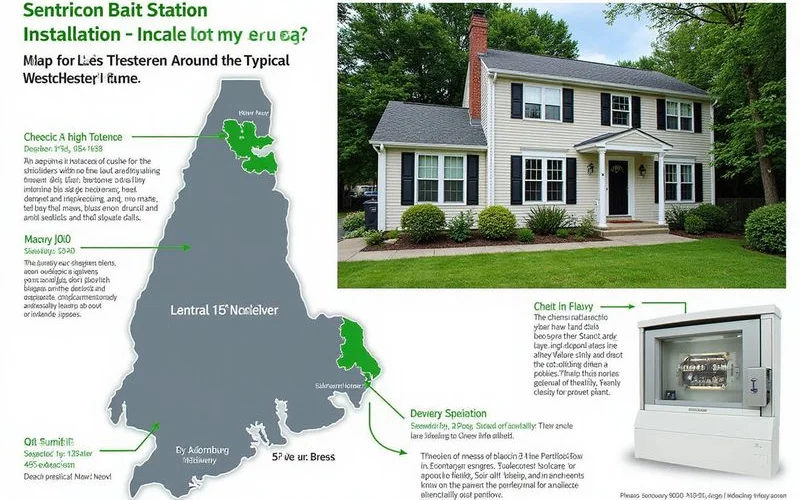
Sentricon Bait Station System
The Sentricon system with Always Active™ technology is the preferred choice for eco-conscious homeowners.
It eliminates the need for trenching or liquid chemicals.
Pricing involves an installation fee plus a maintenance subscription:
| Component | Typical Cost Range |
|---|---|
| Initial Installation (12-20 stations) | $1,200 - $2,800 |
| Annual Monitoring & Bait Service | $250 - $500/year |
| Additional Stations | $75 - $125/station |
We place stations approximately every 10-15 feet around the home’s perimeter.
This spacing creates a complete interception zone.
A standard 2,800-square-foot colonial in Westchester usually needs about 16 to 20 stations.
Expect the initial setup for a home this size to land between $1,800 and $2,400.
Liquid Barrier Treatment
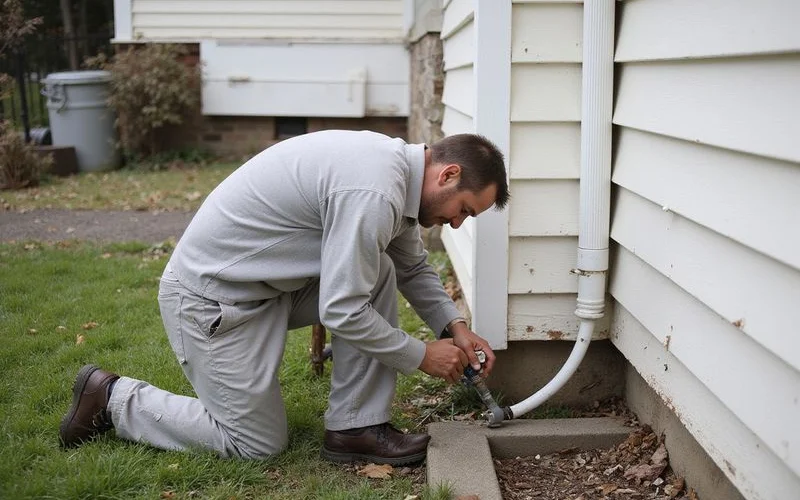
This method involves creating a continuous chemical zone around your foundation.
We use non-repellent termiticides like Altriset or Termidor HE (High Efficiency) for superior results.
Altriset is particularly popular here because it is the only liquid termiticide that doesn’t require a signal word on the label.
Costs depend on the volume of product and the difficulty of application:
| Component | Typical Cost Range |
|---|---|
| Exterior Trench-and-Treat Only | $1,200 - $2,500 |
| Full Treatment (Exterior + Sub-Slab) | $1,800 - $4,500 |
| Rod Treatment (Deep Soil Injection) | $2,200 - $5,000 |
Interior treatments add to the cost because they are labor-intensive.
We may need to drill through the concrete slab in your basement to inject the product directly where termites enter.
This is critical for homes with “floating slabs” where the floor meets the wall.
Combination Treatment
Some situations demand a “belt and suspenders” approach.
We recommend combining a liquid spot treatment at active entry points with a full Sentricon perimeter for long-term colony elimination.
| Component | Typical Cost Range |
|---|---|
| Targeted Liquid + Full Sentricon System | $2,800 - $5,500 |
| Annual Monitoring (Sentricon) | $250 - $500/year |
This strategy works best for homes with immediate structural threats.
You get the instant kill of the liquid and the colony-collapsing power of the bait.
Cost Factors Specific to Westchester County
Our region presents unique challenges that you won’t find in national pricing guides.
The Impact of Local Geology
Westchester is notorious for its rocky terrain.
We often encounter bedrock or large granite boulders just inches below the soil surface in towns like Armonk, Chappaqua, and Bedford.
This makes standard trenching impossible.
Technicians must use rotary hammer drills to create injection points in the rock.
This process consumes expensive carbide drill bits and extends the job time significantly.
Expect a 10-15% premium on labor if your property sits on this type of heavy rock.
Historic Stone Foundations
Homes built before 1920 in river towns like Ossining, Tarrytown, and Croton often feature rubble stone foundations.
These walls are permeable and riddled with hidden voids.
We cannot treat these like modern poured concrete.
Injecting liquid blindly can lead to seepage into the basement.
Treating these historic structures requires a slow, meticulous “gravity feed” approach or a switch to baiting systems to ensure safety.
Finished Basements
Finished lower levels are the norm in our area.
We frequently encounter basements with drywall, hardwood flooring, or complex built-ins.
Accessing the treatment zone behind these finishes is difficult.
You might need to budget an extra $500 to $1,500 for “access and restoration.”
This covers the careful pulling back of carpet, drilling through tile, or cutting small access panels in drywall to reach the foundation header.
Well Water Safety
Many properties in Northern Westchester rely on private wells.
State regulations strictly limit liquid chemical application near these water sources.
We must measure the distance from the foundation to the well head.
If it is within 50 to 100 feet, we generally mandate the use of the Sentricon system.
It is the safest way to protect the structure without risking groundwater contamination.
How to Evaluate Termite Treatment Quotes
Comparing proposals can feel overwhelming.
We suggest using the following criteria to separate professional outfits from low-quality bidders.
Red Flags to Watch For
You should be skeptical of any company that:
- Quotes Over the Phone: No pro can give a firm price without seeing the soil grading and foundation type.
- Offers “Discount” Chemicals: Generic termiticides often degrade in the soil after just 2-3 years, while premium brands like Termidor or Altriset last 10+ years.
- Uses Fear Tactics: Termites work slowly. You always have a few weeks to make a decision.
- Lacks NY DEC Certification: Every technician on your property must be a certified pesticide applicator or strictly supervised by one.
Essential Questions to Ask
Make sure you get clear answers to these specific points:
- “Which specific product is listed on the contract?” (Look for Termidor HE, Altriset, or Sentricon Recruit HD).
- “How do you handle the drill holes?” (They should be plugged with non-shrink grout, not cheap plastic caps).
- “Is the warranty renewable and transferable?” (This adds value to your home if you sell).
- “Does the warranty cover retreatments AND damage repair?” (Repair bonds are rare but valuable).
- “Are you notifying the neighbors?” (Westchester County laws often require notification of neighbors 48 hours prior to liquid applications).
The Value of Warranty Coverage
A warranty acts as your long-term insurance policy.
We typically include a 1-year comprehensive warranty with initial treatment.
You can extend this annually for a fee.
This renewal fee (usually $250-$500) covers an annual inspection and any necessary retreatments at no extra cost.
Think of it as protecting your initial investment.
Letting a warranty lapse means you might have to pay for a full treatment again if a new colony attacks five years later.
The Real Cost of Not Treating
Ignoring the problem is the most expensive option of all.
We see the aftermath of untreated infestations every season.
The National Pest Management Association estimates the average termite repair bill is around $8,000.
However, in the New York metro area, where construction costs are high, structural repairs often exceed $30,000.
Insurance does not help.
Standard homeowners policies specifically exclude termite damage.
You are responsible for 100% of the bill.
Spending $2,500 now to protect a $800,000 asset is a rational financial decision.
Get an Accurate Quote for Your Property
Generic online estimates can only take you so far.
We provide comprehensive, onsite termite control assessments for homeowners throughout Westchester County.
Our team looks at the full picture.
We check your soil conditions, foundation type, and local environmental factors to build a custom plan.
You will receive a clear proposal that explains the exact product we recommend and why it is the safest choice for your family.
Call 844-288-7740 today to schedule your complimentary inspection and get a firm price on protecting your home.
Written by
Michael Corsetti
Board-Certified Entomologist
Cornell-educated entomologist with 20+ years in urban pest management.
Keep Reading
Related Articles
How Often Should You Schedule Pest Control for Your Home?
Discover the ideal pest control service frequency for Westchester homes. Learn why quarterly IPM visits prevent infestations before they start.
How SMART Digital Pest Monitoring Works and Why It Matters
Anticimex SMART sensors detect rodent activity 24/7 without toxic baits. Learn how wireless pest monitoring technology protects Westchester homes.
Complete Guide to Termite Prevention for New York Homeowners
Protect your New York home from subterranean termites with proven prevention strategies. Moisture control, wood-to-soil gaps, and annual inspections explained.