Organic vs Chemical Mosquito Control: Pros and Cons for Your Yard
Compare organic mosquito sprays with traditional chemical barrier treatments. Learn which option is safer for children, pets, and pollinators in your yard.
Sarah Nguyen
The Mosquito Control Decision
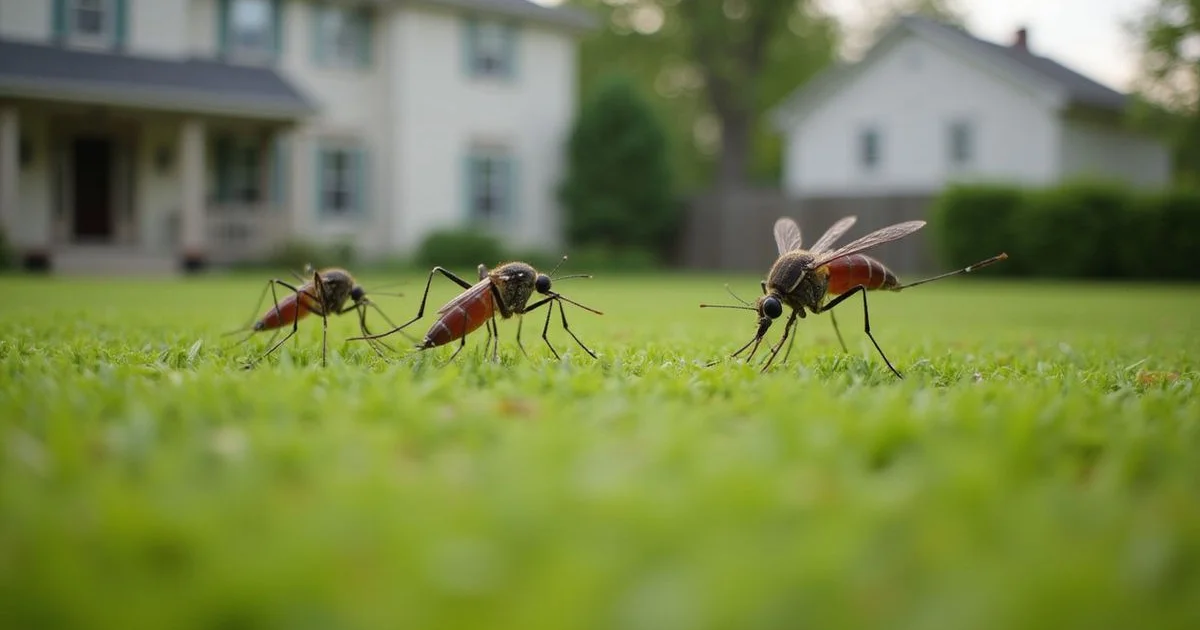
Mosquitoes are more than a nuisance in Westchester County. We are seeing a significant shift in local populations, specifically with the aggressive northward expansion of Aedes albopictus (the Asian tiger mosquito). While the native Culex pipiens prefers dusk and dawn, this invasive species is an aggressive daytime biter that has thrived due to the warmer winters of 2024 and 2025. The Westchester County Department of Health continues to detect West Nile virus in trapped populations, making effective control a matter of public health as well as comfort.
When it comes to reducing mosquito populations on your property, you have two broad categories of treatment: organic (botanical and biological) and synthetic chemical. We find that the best pest control choice depends on your property’s specific conditions, your family’s priorities, and the ecological context of your landscape.
Chemical Mosquito Control
Common Synthetic Products
Professional chemical mosquito control in Westchester County typically uses advanced synthetic pyrethroids. Our technicians rely on specific formulations designed to withstand the humid Hudson Valley summers:
- Suspend PolyZone (Deltamethrin): This is widely considered the gold standard in modern application. It features a proprietary polymer layer that protects the active ingredient from rain and UV breakdown, extending efficacy to nearly 60 days in optimal conditions.
- Talstar P (Bifenthrin): A synthetic pyrethroid that provides solid knockdown power. It is one of the most commonly used products for residential barrier treatments due to its cost-effectiveness and broad-spectrum control.
- Lambda-cyhalothrin: A pyrethroid used in some professional formulations for its quick knockdown and moderate residual activity.
How Chemical Barrier Treatments Work
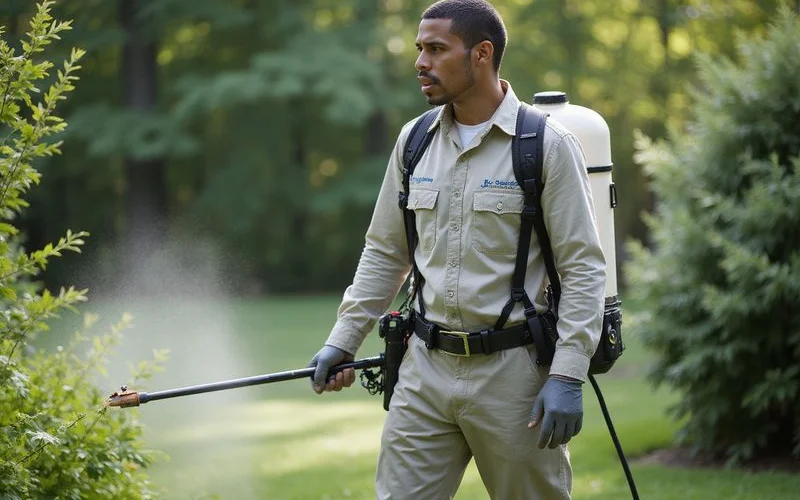
A technician applies a fine mist of diluted product to vegetation, tree trunks, fence lines, under decks, and other areas where mosquitoes rest during the day. Adult mosquitoes resting on treated surfaces contact the product and die within hours. The residual deposit continues to kill mosquitoes that land on treated surfaces for 3-4 weeks under normal weather conditions.
Important Regulatory Note: In Connecticut, state regulations require pesticide application businesses to notify abutting neighbors if they are on the central registry. We always recommend checking the latest CT DEEP notification rules if you live near the border or have sensitive neighbors.
Pros of Chemical Treatments
- High efficacy: Synthetic pyrethroids are extremely effective at killing adult mosquitoes on contact and through residual exposure.
- Long residual: Advanced polymer formulations like Suspend PolyZone can provide protection for up to 8 weeks, though monthly service is standard.
- Broad spectrum: Also reduces ticks, fleas, and other biting insects in treated areas.
- Cost-effective: Generally less expensive per application than organic alternatives due to lower product costs and longer treatment intervals.
Cons of Chemical Treatments
- Pollinator impact: Pyrethroids are toxic to bees, butterflies, and other beneficial insects. Applications during flowering periods or to flowering plants can kill pollinators directly. The Xerces Society for Invertebrate Conservation has raised significant concerns about residential pyrethroid use and pollinator decline.
- Aquatic toxicity: Pyrethroids are extremely toxic to fish and aquatic invertebrates. Properties near streams, ponds, the Bronx River, Kensico Reservoir, or other water bodies require careful buffer zones.
- Non-selective: Kills beneficial insects along with mosquitoes, potentially disrupting natural pest control mechanisms in your yard’s ecosystem.
- Resistance development: Mosquito populations, particularly Culex species in the Northeast, are showing increasing resistance to standard pyrethroids. However, the invasive Asian tiger mosquito currently remains largely susceptible.
Organic Mosquito Control
Common Organic Products
True professional-grade organic control has moved far beyond simple home remedies. We utilize EPA 25(b) exempt products that are powerful enough for commercial use:
- EcoVia MT (Mosquito & Tick): This is a top-tier botanical concentrate using thyme, rosemary, and peppermint oils. Unlike older products, it mixes well and utilizes “vapor phase” repellency to keep pests out of the treated zone.
- Essentria IC-3: A long-standing industry favorite containing rosemary and peppermint oils. It provides immediate knockdown, though it is known for having a stronger “wintergreen” scent than newer formulations like EcoVia.
- Garlic-based sprays: Concentrated garlic juice applied to vegetation creates a strong odor that repels mosquitoes. Efficacy is moderate and duration is shorter (1-2 weeks).
- Bacillus thuringiensis israelensis (Bti): A naturally occurring soil bacterium that specifically targets mosquito larvae in standing water. Extremely targeted with virtually no impact on non-target organisms.
How Organic Treatments Work
Organic barrier treatments are applied in the same manner as chemical treatments: misting vegetation, structures, and resting sites. The mechanism differs by product. Some (cedar oil, garlic) function primarily as repellents that make treated areas undesirable for mosquitoes. Others (Bti) target the larval stage in water sources, preventing the next generation from developing into biting adults.
Insider Tip: While chemical sprays rely on death-on-contact, organic botanical oils like EcoVia work largely by scent confusion. The strong essential oil vapors mask the CO2 and lactic acid you emit, effectively making you invisible to the mosquito’s sensors.
Pros of Organic Treatments
- Pollinator safety: Most organic mosquito products have minimal impact on bees and butterflies when applied correctly. Bti has essentially zero impact on non-target organisms.
- Aquatic safety: Organic products generally have much lower aquatic toxicity than pyrethroids. Bti is EPA-approved for use in water bodies frequented by fish and wildlife.
- Environmental compatibility: Organic products break down more rapidly in the environment, reducing cumulative ecological impact.
- Pet and child considerations: Many Westchester families prefer organic options for properties where children play on treated grass or pets spend significant time outdoors.
Cons of Organic Treatments
- Lower efficacy: Organic products generally provide less complete mosquito reduction than synthetic pyrethroids. Expect 50-70% reduction versus 80-95% for chemical treatments.
- Shorter residual: Most organic products require reapplication every 2-3 weeks, increasing the total number of applications per season.
- Higher cost: More frequent applications and higher product costs make organic programs typically 20-40% more expensive per season than chemical programs.
- Weather sensitivity: Organic products are more susceptible to degradation from rain and UV exposure, reducing effective residual periods during the humid Hudson Valley summer.
Head-to-Head Comparison
| Factor | Chemical (Pyrethroid) | Organic (Botanical) |
|---|---|---|
| Adult mosquito kill rate | 80-95% (High) | 50-70% (Moderate) |
| Residual duration | 3-4 weeks | 2-3 weeks |
| Rain resistance | High (Polymer enhanced) | Low (Washes off easier) |
| Pollinator impact | High | Low to minimal |
| Average Season Cost | $450 - $550 | $600 - $850 |
| Applications per season | 7-8 | 9-12 |
| Pet/child safety interval | Dry time (30-60 mins) | Varies; often immediate |
| Resistance risk | Increasing (esp. Culex) | Minimal |
The Integrated Approach: Best of Both
Many Westchester homeowners find that an integrated approach provides the best balance of efficacy and environmental responsibility. We often design hybrid programs that maximize protection while minimizing chemical load.
Targeted Chemical + Broad Organic
Apply synthetic treatments only to specific high-risk resting sites (under decks, in dense shrubbery, around seating areas) while using organic products for broader yard coverage. This concentrates chemical use where it has the greatest impact while minimizing exposure across the overall property.
Chemical Perimeter + Bti Larviciding
Combine perimeter barrier treatments with Bti applications to all standing water sources on the property. Bti eliminates mosquitoes at the larval stage with zero ecological impact, reducing the overall adult mosquito population that barrier treatments need to address.
Seasonal Adjustment
Use chemical treatments during peak mosquito season (July-August) when populations are highest and disease risk is greatest, then transition to organic products during shoulder seasons (May-June, September-October) when populations are lower and pollinators are most active.
Source Reduction: The Foundation of Any Program
Regardless of which treatment approach you choose, eliminating mosquito breeding habitat on your property is the single most impactful step. We see many properties where a single hidden source undermines the entire treatment plan.
Hidden Breeding Grounds to Check
- Pop-Up Emitters: The NDS-style pop-up drain emitters common in Westchester lawns often have a bar across the center that catches pine needles. This debris prevents the valve from closing, allowing water to pool inside the pipe and breed thousands of mosquitoes underground.
- Corrugated Drain Pipes: The ridges in flexible black drainage pipes can hold enough water for breeding even when “empty.” Ensure these are pitched correctly.
- Tarps: A blue tarp covering a woodpile or boat can hold hundreds of tiny pockets of water. Tighten them daily.
Standard Maintenance Checklist
- Empty or overturn containers that collect rainwater weekly
- Clean gutters to prevent standing water accumulation
- Treat ornamental ponds and birdbaths with Bti mosquito dunks
- Fix leaking outdoor faucets and irrigation systems
- Store boats, wheelbarrows, and other equipment upside down
- Maintain swimming pool filtration and chlorination
In Westchester’s suburban landscape, a single unmaintained birdbath or clogged gutter can produce thousands of mosquitoes per week during summer months.
Choose the Right Approach for Your Property
Pristine Pest offers both organic and conventional tick and mosquito management programs for Westchester County properties, as well as integrated programs that combine elements of both. Our licensed technicians assess your property’s specific conditions, including proximity to water features, pollinator gardens, play areas, and wildlife habitat, to recommend the approach that provides the best balance of mosquito reduction and environmental stewardship. Call 844-288-7740 to discuss which mosquito management strategy is right for your yard.
Written by
Sarah Nguyen
Licensed Wildlife Biologist
Wildlife biologist specializing in humane removal and LymeShield deployment.
Keep Reading
Related Articles
DIY Pest Control vs Hiring a Professional: When to Call an Expert
Should you handle pest control yourself or hire a licensed exterminator? Compare costs, effectiveness, and safety of DIY vs professional pest management.
Traditional Pest Traps vs SMART Digital Monitoring: A Full Comparison
Compare traditional snap traps and poison baits against SMART wireless sensors. See how digital pest detection outperforms conventional rodent control.
Sentricon Bait System vs Liquid Termite Treatment: Which Is Better?
Compare the Sentricon baiting system with traditional liquid barrier termite treatments. Learn which method eliminates termite colonies more effectively.