Lyme Disease Symptoms Every Westchester Resident Should Know
Westchester County is a high-risk area for Lyme disease. Learn to recognize early symptoms, when to seek treatment, and how to reduce tick exposure.
Sarah Nguyen

Westchester County: A Lyme Disease Hotspot
Westchester County isn’t just a suburb; it is one of the most intense Lyme disease environments in the entire United States. We have observed that the ecological conditions here—specifically the “ecotone” or edge habitats where our well-groomed lawns meet dense woodlands—are creating a perfect storm for transmission.
Recent data from the New York State Department of Health indicates a significant surge, with over 18,704 confirmed or probable Lyme cases reported in the state (excluding NYC) in 2024. While many residents know about the blacklegged tick (Ixodes scapularis), few realize that our mild winters in 2025 and 2026 have disrupted the traditional “tick season.”
The Local “Tick Index” Reality We closely monitor the Fordham Tick Index as part of our pest control research, produced by the Louis Calder Center right here in Armonk. Their research consistently shows that risk levels can remain “High” even into December if temperatures stay above freezing.
In our experience, the greatest danger isn’t actually the adult tick you can see. It is the poppy-seed-sized nymph, active from late May through July. Because they are so small, they are responsible for the vast majority of infections simply because they go unnoticed until it is too late.
Stage 1: Early Localized Infection (3-30 Days After Tick Bite)
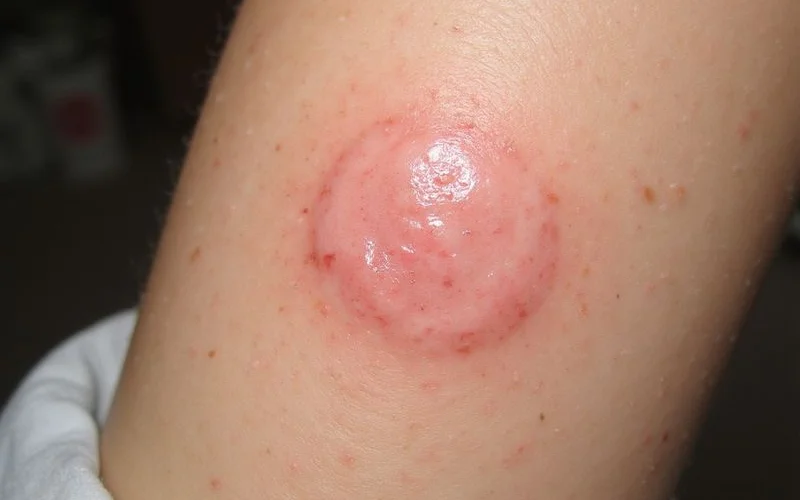
The Erythema Migrans Rash: Debunking the Bull’s-Eye Myth
The most dangerous misconception we encounter is the belief that you are safe if you don’t see a “bull’s-eye.” A landmark 2025 study supported by the Bay Area Lyme Foundation found that the classic concentric ring pattern appears in only a minority of cases.
From what we see in the field, the rash often looks more like a solid red oval or a bruise. If you wait for the rings to appear, you might miss the window for early treatment.
| Feature | Classic “Bull’s-Eye” | Common Lyme Rash (Atypical) | Spider/Insect Bite |
|---|---|---|---|
| Appearance | Red ring with central clearing | Uniformly red, expanding oval | Small red bump, often raised |
| Frequency | 20-30% of cases | 50%+ of cases | Very Common |
| Sensation | Warm, rarely itchy/painful | Warm, non-itchy | Sharp pain, intense itching |
| Growth | Expands rapidly (>2 inches) | Expands rapidly (>2 inches) | Stays small, heals quickly |
Insider Tip: If you see any expanding redness, grab a ballpoint pen. Circle the outer edge of the rash and write the time next to it. If the redness crosses that line after 12-24 hours, you have objective proof of expansion to show your doctor.
Early “Summer Flu” Symptoms
Concurrent with or shortly after the rash (if present), many patients experience systemic symptoms. We often tell homeowners: “There is no such thing as the flu in July.”
If you experience flu-like symptoms during Westchester’s tick season (now effectively March through December), you must assume it is tick-borne until proven otherwise.
- Fatigue: A profound exhaustion that sleep doesn’t fix.
- Migrating Pain: Joint aches that move (e.g., left knee on Monday, right shoulder on Wednesday).
- Stiff Neck: Often dismissed as “sleeping wrong,” but can be a sign of early meningitis.
Stage 2: Early Disseminated Infection (Weeks to Months)
If left untreated, the Borrelia burgdorferi bacterium spreads through the bloodstream. This is where the disease becomes a multi-system attacker.
Neurological Symptoms
Approximately 10-15% of untreated patients develop neurological issues. We frequently hear reports of Bell’s palsy (facial drooping) occurring without any prior rash. This paralysis is caused by inflammation of the seventh cranial nerve and should be treated as a medical emergency.
Cardiac Symptoms: Lyme Carditis
While rare (1-5% of cases), this is potentially fatal. The bacteria can enter the heart tissue and interfere with electrical signals, causing “heart block.”
- Warning Sign: Lightheadedness or fainting spells in an otherwise healthy young person.
- Urgency: This condition can progress rapidly. If you have palpitations and a history of tick exposure, request an EKG immediately.
Musculoskeletal Symptoms
- Migratory Joint Pain: Unlike the constant ache of osteoarthritis, Lyme pain tends to flare and move.
- New Rashes: You may see smaller secondary rashes appear on parts of the body where you were not bitten. This confirms the bacteria has entered your bloodstream.
Stage 3: Late Disseminated Infection (Months to Years)
Lyme Arthritis
This is the most common late-stage symptom, affecting up to 60% of untreated patients. We often see this present specifically as “Lyme Knee”—extreme swelling in one or both knees that may not be incredibly painful but is visibly alarming.
Chronic Neurological Symptoms
- Lyme Encephalopathy: Often called “brain fog,” this includes short-term memory loss and word-finding struggles.
- Peripheral Neuropathy: A tingling or burning sensation in the hands and feet.

When to See a Doctor
You should seek medical evaluation immediately if you find an engorged tick or develop symptoms. However, navigating the healthcare system can be tricky.
The “False Negative” Trap
The most critical piece of advice we can share is this: Do not rely solely on a negative test result.
Current two-tiered testing (ELISA + Western Blot) relies on antibody production, which can take weeks to develop. The November 2025 study published in Frontiers in Medicine revealed that standard two-tier testing missed 77% of early Lyme disease cases.
Our Recommendation for Homeowners:
- Advocate for Clinical Diagnosis: If you have the rash or specific symptoms in a high-risk area like Westchester, the CDC guidelines support diagnosis based on clinical signs, even with a negative test.
- Test the Tick, Not Just Yourself: Instead of flushing a tick, save it. We recommend sending it to the Thangamani Lab at SUNY Upstate Medical University. Their citizen science program can often tell you what pathogens the tick was carrying, which provides your doctor with actionable data.
Reducing Your Risk in Westchester County
Prevention is your only guaranteed cure. We recommend a layered defense strategy that goes beyond just “checking for ticks.”
Personal Protection Measures
| Method | Active Ingredient | Efficacy | Best Use Case |
|---|---|---|---|
| Skin Repellent | Picaridin 20% | Excellent | Best all-rounder. As effective as DEET but odorless and non-greasy. |
| Skin Repellent | DEET 25-30% | Excellent | The old standard. highly effective but can damage plastics/gear. |
| Clothing Treatment | Permethrin 0.5% | Superior | Do not apply to skin. Spray on shoes/pants. Kills ticks on contact. |
Pro-Tip: Ticks don’t jump; they crawl up. We tell our clients to focus their Permethrin treatments specifically on shoes and socks. Most ticks latch on below the knee, so creating a “kill zone” at foot level is your most effective barrier.
Property-Level Protection
- Create a “Tick-Safe Zone”: Ticks hate drying out. Maintain a 3-foot wide barrier of wood chips or gravel between your lawn and the woods. This hot, dry strip prevents them from migrating into your yard.
- Remove Japanese Barberry: This invasive shrub is a tick nursery. Its dense, humid structure is the perfect breeding ground for white-footed mice (the primary Lyme carriers) and ticks.
- Deer Fencing: If you can keep the deer out, you drastically reduce the introduction of adult ticks into your landscape.
Tick Removal
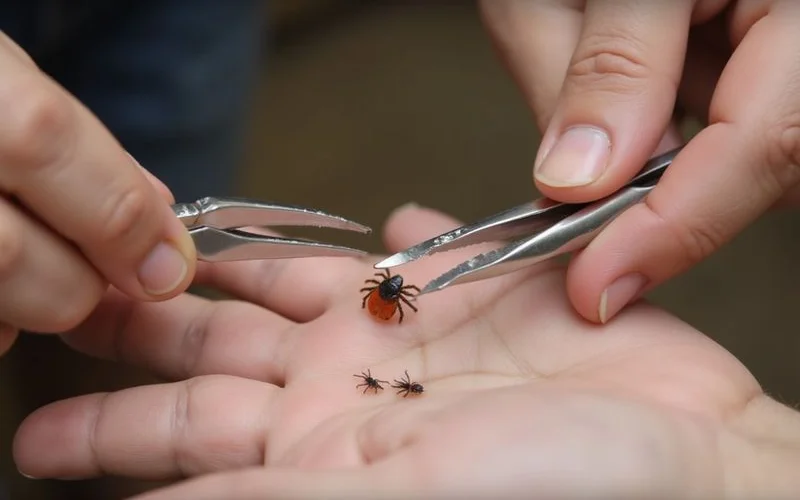
If you find an attached tick, speed is key, but technique matters more.
- Use Pointy Tweezers: Blunt tweezers often crush the body, squeezing bacteria into your blood.
- Grasp the Head: Get as close to the skin as possible.
- Pull Upwards: Use steady pressure. Do not twist.
- Save It: Tape it to an index card or put it in a ziplock bag for testing.
What to Avoid: Never use petroleum jelly, nail polish, or heat (matches). These folk remedies cause the tick to vomit its stomach contents into your bloodstream, increasing the risk of infection.
[AddInfographic]
Professional Tick Management for Your Property
At Pristine Pest, we believe that relying on luck is not a strategy. Our team uses a data-driven approach tailored to the unique micro-climates of Westchester County.
We design integrated management programs that go beyond simple spraying. By combining targeted perimeter treatments with our LymeShield tick and mosquito management program, we address the root of the problem: the mouse population that infects the ticks in the first place.
Protecting your family requires a proactive, consistent plan. Call us at 844-288-7740 to schedule a comprehensive tick risk assessment for your property.
Written by
Sarah Nguyen
Licensed Wildlife Biologist
Wildlife biologist specializing in humane removal and LymeShield deployment.
Keep Reading
Related Articles

7 Signs You Have a Pest Problem in Your Westchester Home
Learn the early warning signs of a pest infestation in Westchester County homes. From droppings to wall scratching, know when to call a professional exterminator.

5 Benefits of 24/7 Pest Detection Technology for Your Home
From early detection to zero chemicals, discover why round-the-clock digital pest monitoring is changing how Westchester homeowners protect their properties.
6 Warning Signs of Termite Damage in Westchester Homes
Mud tubes, hollow wood, and swarmers are early signs of termite activity. Learn how to spot subterranean termite damage before it becomes costly.