How Often Should You Schedule Pest Control for Your Home?
Discover the ideal pest control service frequency for Westchester homes. Learn why quarterly IPM visits prevent infestations before they start.
Michael Corsetti
The Case for Preventive Pest Management
You know how your car runs better when you change the oil before the engine starts smoking? Pest control works the exact same way. Most homeowners only call us after they spot a mouse in the pantry or ants on the counter.
By that time, the colony has likely been growing behind your walls for weeks.
A proactive approach to pest control changes the dynamic entirely. Instead of fighting a massive, established infestation, we catch activity when it involves just a handful of pests. This difference saves you significant money and stress. A 2023 industry analysis found that reactive treatments often cost 25% to 60% more than scheduled maintenance visits due to the intensity of labor required to flush out established populations.
In Westchester County, we face a unique set of challenges. Our region combines dense, mature vegetation with historic housing stock. We see field mice seeking warmth in 1920s stone foundations and carpenter ants excavating wet wood in 1980s deck additions. The environmental pressure here never stops; it just cycles through different species.
Recommended Service Frequencies
The right schedule isn’t a guess. It is a calculation based on biology and local climate data.
We base our recommendations on the specific lifecycle of pests in the Hudson Valley and Connecticut shoreline. Factors like local humidity levels and forest proximity play a huge role.
Quarterly Service (Every 3 Months)
For most residential properties in our area, a quarterly Integrated Pest Management (IPM) plan is the gold standard. This frequency allows us to intercept pests just as their seasonal behaviors shift.
A typical year of protection looks like this:
- Q1 (January-March): Rodent & Spider Control. We focus heavily on the interior during these freezing months. Deer mice (Peromyscus maniculatus) are actively seeking warmth inside wall voids. Our technicians check basement sills and attic insulation for nesting activity.
- Q2 (April-June): Emergence Prevention. As soil temperatures cross the 50°F threshold, insects wake up. We target Carpenter Ants scouting for water-damaged wood and apply early barriers against American Dog Ticks.
- Q3 (July-September): Peak Activity Defense. High humidity brings out the stinging insects. We actively locate and neutralize Yellowjacket and Bald-faced Hornet nests while managing mosquito populations that thrive in summer storms.
- Q4 (October-December): Exclusion & Overwintering. Pests like the Stink Bug and Boxelder Bug try to enter siding now. We seal entry points and reinforce the exterior perimeter to keep wildlife out before the first hard freeze.
Monthly Service - High-Risk Properties
Quarterly visits work for standard homes, but some situations demand tighter intervals. A thirty-day cycle breaks the reproductive loop of fast-breeding pests like German Cockroaches or Norway Rats.
We generally recommend monthly service for:
- Waterfront Homes: Properties near the Sound, the Hudson, or local reservoirs face intense mosquito and rodent pressure.
- Heavily Wooded Lots: Homes in areas like Pound Ridge or Bedford that back up to nature preserves are on the front lines of tick migration.
- Historic Structures: Houses with fieldstone foundations (rubblestone) often have hundreds of natural gaps that require constant monitoring.
- Commercial Kitchens: Any home-based food business must meet strict sanitation codes that require frequent documentation.
Bi-Annual Service (Twice per Year)
Some homeowners ask about twice-a-year treatments. This usually covers a spring “cleanout” and a fall “button-up.”
New construction with spray-foam insulation and perfect grading can sometimes get away with this. The risk here is the gap in monitoring. A paper wasp nest can grow from the size of a golf ball to a basketball in the months between a spring and fall visit. We view this as a minimum-viability option rather than an optimal protection strategy.
What Happens During a Quarterly IPM Visit
Many people think a service visit is just someone spraying baseboards. That is an outdated method from the 1980s. Modern IPM is about investigation and environmental adjustments.
Inspection (15-20 Minutes)
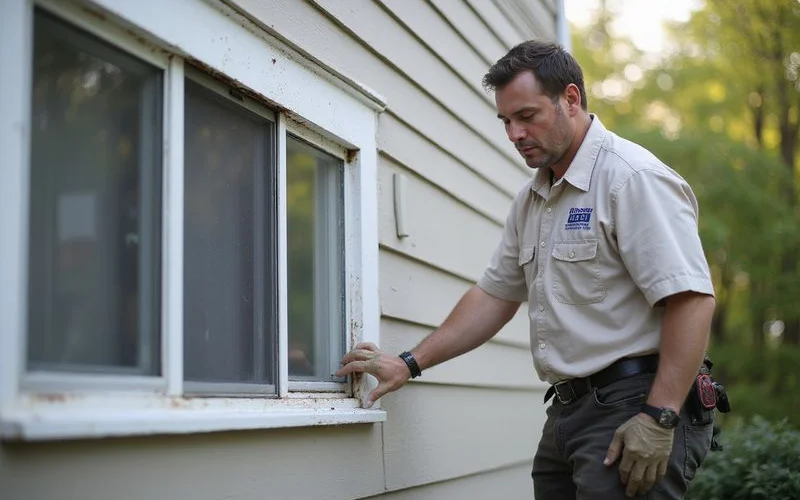
Our technicians start with a detective’s mindset. We look for “rub marks” from rodents along baseboards, piles of “frass” (insect debris) near windows, or high moisture readings in basements.
The goal is to find the source conditions. Identifying a leaking spigot that is attracting carpenter ants is more effective than just spraying the ants themselves.
Monitoring Device Check
Data drives our decisions. We check discrete monitors placed in critical zones like utility rooms and garages.
These devices tell us exactly what is moving through your home when no one is looking. If we find three cricket captures in a mechanical room, we know a door seal is failing nearby.
Targeted Treatment
Application happens only where it is necessary. We use low-toxicity products selected for the specific pest found during inspection.
For example, we might use a gel bait for roaches in a kitchen crack but a liquid repellent for ants on the exterior foundation. This precision keeps your family and pets safe while ensuring maximum impact on the target pest.
Exclusion and Environmental Modification
Blocking the path is better than fighting the invader. We seal small gaps around pipe penetrations with copper mesh or silicone.
For larger issues, like a rotted door sweep or overgrown ivy touching the siding, we provide a specific remediation checklist. You receive clear instructions on what physical changes will reduce your pest risk.

Documentation and Reporting
You never have to guess what we did. Every visit ends with a digital report detailing the exact products used, the pests found, and the areas treated. This history is vital if you ever decide to sell your home, as it proves due diligence in maintenance.
Factors That Affect Your Ideal Frequency
Every house has a unique “risk score” when it comes to pests.
Property Age and Construction
Older homes are beautiful, but they are Swiss cheese to a mouse.
Construction Risk Table
| Home Feature | Pest Vulnerability | Risk Level |
|---|---|---|
| Stone/Rubble Foundation | Natural gaps allow rodents and snakes easy entry. | High |
| Balloon Framing (Pre-1950) | Wall voids run from basement to attic, acting as a pest superhighway. | High |
| Vinyl Siding | Loose J-channels provide nesting spots for wasps and flies. | Medium |
| Poured Concrete Foundation | Solid barrier, though cracks can develop over time. | Low |
Surrounding Environment
Your neighbors matter, especially if your neighbors are trees. Properties bordering the Old Croton Aqueduct or Ward Pound Ridge Reservation deal with a “pest reservoir” effect. Wildlife constantly tests your perimeter from these protected areas.
Previous Pest History
Pests leave chemical trails. Even after a carpenter ant colony is destroyed, the pheromone trails they laid down can remain in the wood for years. These scent markers signal to future colonies that your home is a good nesting site, making frequent monitoring essential to prevent re-infestation.
Seasonal Add-Ons
Standard service covers the basics, but specific threats require dedicated protocols.
- Tick & Mosquito Control: These vectors carry Lyme disease and West Nile virus. We treat foliage every 3-4 weeks from April through October.
- Termite Sentricon® Systems: These require specialized checks twice a year to ensure the colony elimination bait is active.
- Wildlife Exclusion: Fall is the critical time to install heavy-duty screens on vents to stop squirrels and raccoons.
The Cost of Skipping Regular Service
It is easy to look at a service bill and wonder if you can skip a quarter. The data suggests this is a financial mistake.
The National Pest Management Association indicates that termite damage alone costs U.S. homeowners over $5 billion annually—damage that is rarely covered by standard homeowner’s insurance.
Think of pest control like dental hygiene. A cleaning costs a little bit now; a root canal costs a fortune later. Ignoring a small mouse issue in the attic can lead to thousands of dollars in contaminated insulation replacement down the road.
Build Your Custom Protection Plan
One-size-fits-all plans rarely work in our region. At Pristine Pest, we build your general pest control strategy based on the specific evidence we find at your home.
Our team brings over 50 years of local experience to your doorstep. We combine that deep local knowledge with modern SMART digital monitoring to offer protection that is both high-tech and high-touch.
You don’t have to wait for an emergency to get peace of mind. Call us at 844-288-7740 to schedule a comprehensive assessment. Let’s create a barrier around your home that actually holds.
Written by
Michael Corsetti
Board-Certified Entomologist
Cornell-educated entomologist with 20+ years in urban pest management.
Keep Reading
Related Articles
How SMART Digital Pest Monitoring Works and Why It Matters
Anticimex SMART sensors detect rodent activity 24/7 without toxic baits. Learn how wireless pest monitoring technology protects Westchester homes.
How Much Does Termite Treatment Cost in Westchester County?
Get realistic termite treatment pricing for Westchester homes. Compare costs for Sentricon bait stations, liquid treatments, and annual monitoring plans.

Complete Guide to Termite Prevention for New York Homeowners
Protect your New York home from subterranean termites with proven prevention strategies. Moisture control, wood-to-soil gaps, and annual inspections explained.